
Architectural Engineering Department
Department of architectural engineering at Salahaddin University-Erbil is proud to be the home of nearly 350 students studying at both undergraduate and postgraduate levels. It is located at the campus of the College of Engineering. The department grants BSc. Architecture after a 5 years program including a graduation project in year 5, MSc. Architecture after a 2 years program including graduation thesis, and PhD Architecture after 3 years program including a graduate research thesis.
Since it is the establishment in the academic year 1993- 1994, the department provided hundreds of qualified architects that serve Erbil city in particular and Kurdistan region in general.
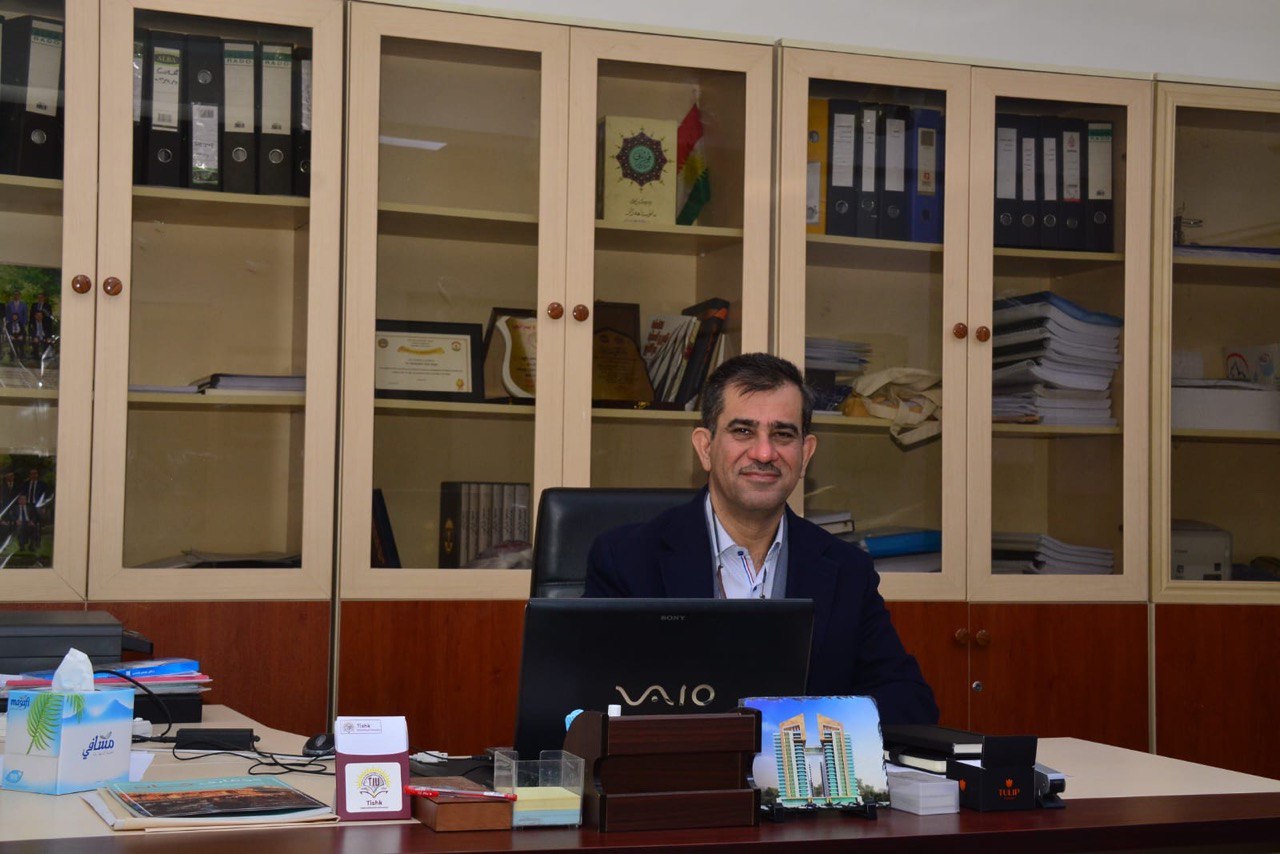
Professor Dr. Salahaddin Yasin Baper is the head of the Architecture department /college of Engineering at University of Salahaddin- Erbil, Kurdistan Region, IRAQ. He obtained his BSc in Architecture from University of Technology, Baghdad Iraq with Honors. He continued his M.Sc. in architectural technology at University of Technology, Iraq. He earned his PhD in theory of architecture in School of Housing, Building and Planning-USM Malaysia. He works as a Consultant Architect and designed several important projects in Erbil city like supplementary buildings in Erbil International Airport and Sami Abdurrahman Park. Further to his duties, he is acting as Director of the Salahaddin University New campus project.
Professor Dr. Salahaddin Yasin Baper Email: [email protected]The department of architecture strives to use design thinking and creative problem solving to address the issues faced by buildings, cities, and societies . We integrate this approach into how to teach students, the research outputs, and the services that we provide to local societies. The department is trying to prepare the graduates to actively participate in the design and construction of various building typologies in the Kurdistan, and respond to change in the local, national and international communities.
This is achieved through five year learning, working and practicing to cover architecture development needs by designing realistic projects in the city during the study periods.
VisionArchitecture Department aims to be a reliable source for all Architects in Kurdistan. Giving academic strength to our Students to obtain specific disciplines.
Connecting Architecture department to a future futuristic Architecture development through a valuable teaching methods.
Graduates of the Architectural Engineering Department at Salahaddin University-Erbil will be able to:
- Demonstrate design excellence by developing creative, functional, and contextually appropriate architectural solutions across various scales and typologies. This will be done through the integration of conceptual thinking, spatial awareness, and technical proficiency in architectural design, culminating in a comprehensive thesis project.
- Apply interdisciplinary knowledge across core areas such as urban planning, sustainability, structural systems, interior design, landscape design, and building regulations to develop innovative, contextually responsive architectural solutions.
- Critically engage with architectural history, theory, and philosophy to inform and enrich design approaches, while applying ethical principles and critical thinking methods in both research and practice.
- Understand and respect cultural heritage, by assessing the significance of historic sites prior to intervention, and designing in accordance with international standards and local heritage conservation values.
- Create and communicate architectural designs through freehand sketches, conceptual representations, computer-aided design drawings, digital modelling, technical drawings, oral presentations, and construction documents essential for the specification, elaboration, and execution of architectural projects.
- Understand and apply principles of structural engineering, including steel and concrete systems, to ensure the integrity and feasibility of architectural structures.
- Employ project management skills to lead engineering and architectural projects from initiation to completion, including planning, scheduling, resource allocation, budgeting, and risk management.
- Respond to environmental, cultural, and social challenges by designing sustainable, inclusive, and climate-resilient built environments.
- Demonstrate readiness for professional practice through hands-on experience in studios, internships, and multidisciplinary collaboration, while upholding ethical and professional standards.
- Engage in lifelong learning and maintain adaptability to emerging technologies, global architectural trends, and evolving professional roles.
The Architecture Department maintains strong collaborations with both local and international partners.
At the local level, the department has established partnerships with over 30 architectural firms and construction companies through its structured internship program, providing students with practical, real-world experience.
Internationally, the department actively collaborates with a range of universities and external organizations through joint research publications, training programs, conferences, and workshops, in which enhancing academic exchange and global engagement.
Degree program Overview > Undergraduate study
Undergraduate study
Program Duration: Five Years (10 Semesters)
Total Credits: 300 credits (Core: 210 | Elective: 90)
The BSc in Architectural engineering is a comprehensive five-year undergraduate program designed to cultivate creative, technically proficient, and socially responsible architects. Offered by the Department of Architectural Engineering, the program provides students with a balanced education combining theory, technical skills, and design practice.
Students engage in a progressive studio-based learning environment, reinforced with a strong foundation in architectural design, construction technology, sustainability, history, structures, urban planning, and digital tools. Through immersive learning in both lecture and practical formats, the curriculum promotes critical thinking, cultural awareness, and technical competence necessary to address the built environment's challenges. The final year includes the development and presentation of Thesis Report and Thesis Project, allowing students to demonstrate their accumulated knowledge and design capabilities. A supervised Engineering Internship provides real-world professional experience.
Degree program Overview > Postgraduate studies
Postgraduate study
The Department of Architectural Engineering at Salahaddin University-Erbil offers a structured and advanced postgraduate academic track through Higher Diploma, Master of Science (M.Sc.), and Doctor of Philosophy (Ph.D.) programs. These programs aim to cultivate highly qualified researchers, academics, and professional architects equipped to address complex challenges in architecture and built environment fields.
- Higher Diploma Program
Duration: 1 year
The Higher Diploma is designed for graduates and professionals seeking to upgrade their technical skills and knowledge in the architectural engineering field. The program is structured to include 60 ECTS.
|
|
FIRST SEMESTER |
||
|
|
Subjects |
Type |
ECTS |
|
1 |
Building Construction Technology |
core |
6 |
|
2 |
Housing Methods |
core |
6 |
|
3 |
Slums and Urban Renewal |
core |
6 |
|
4 |
Urban Mobility System |
core |
6 |
|
5 |
Elective 1/Environmental Design |
elective |
6 |
|
Elective2/Architectural Sustainability |
elective |
||
|
|
|
Total |
30 |
|
|
SECOND SEMESTER |
||
|
|
Subjects |
Type |
ECTS |
|
6 |
Urban Form and Growth |
core |
6 |
|
7 |
City Planning Methods |
core |
6 |
|
8 |
Building Typology |
core |
6 |
|
9 |
Sustainable public transportation system |
core |
6 |
|
10 |
Elective 1/Environmental Design |
elective |
6 |
|
Elective2/Human Environments Relations |
elective |
||
|
|
|
Total |
30 |
- Master of Science (M.Sc.) Program
Duration: 2 years
The M.Sc. program combines advanced coursework and supervised research to deepen students' understanding and prepare them for professional practice or further academic study. The program is structured to include 120 ECTS over two academic years.
|
FIRST SEMESTER |
|
|
|
Subject |
Type |
ECTS |
|
Statistics In Architecture |
core |
6 |
|
Research Methodology |
core |
6 |
|
Urban Studies |
core |
6 |
|
Design Strategies |
core |
6 |
|
Environment: Performance based design |
elective |
6 |
|
Housing Theories |
elective |
|
|
SECOND SEMESTER |
|
|
|
Building Technology |
core |
6 |
|
Evidenced Based Design |
core |
6 |
|
Architectural Identity |
core |
6 |
|
Advanced Housing Theory |
core |
6 |
|
Architectural Sustainability |
elective |
6 |
|
Urban Terminology |
elective |
|
|
|
Total Coursework |
60 |
|
MSc Thesis
|
60 |
|
|
Total credits |
120 |
|
- Doctor of Philosophy (Ph.D.) Program
Duration: 3 years
The Ph.D. program is a research-intensive degree that provides scholars with advanced knowledge and tools for innovation, critical analysis, and contribution to latest advancement in architectural engineering. The program includes coursework and original research culminating in a thesis and defence. The program is structured to include 180 ECTS over three academic years.
|
Subject |
Type |
ECTS |
|
Advanced Statistic Analysis |
core |
6 |
|
Research Methodology |
core |
6 |
|
Philosophy Of Urban Spaces |
core |
6 |
|
Philosophy Of Architecture |
core |
6 |
|
Advanced Smart Technology |
core |
6 |
|
Total Coursework |
30 |
|
|
PhD thesis |
150 |
|
|
Total credits |
180 |
|
Curriculum details > Program learning outcomes:
Graduates of the Architectural Engineering Department at Salahaddin University-Erbil will be able to:
- Demonstrate design excellence by developing creative, functional, and contextually appropriate architectural solutions across various scales and typologies. This will be done through the integration of conceptual thinking, spatial awareness, and technical proficiency in architectural design, culminating in a comprehensive thesis project.
- Apply interdisciplinary knowledge across core areas such as urban planning, sustainability, structural systems, interior design, landscape design, and building regulations to develop innovative, contextually responsive architectural solutions.
- Critically engage with architectural history, theory, and philosophy to inform and enrich design approaches, while applying ethical principles and critical thinking methods in both research and practice.
- Understand and respect cultural heritage, by assessing the significance of historic sites prior to intervention, and designing in accordance with international standards and local heritage conservation values.
- Create and communicate architectural designs through freehand sketches, conceptual representations, computer aided design drawings, digital modelling, technical drawings, oral presentations, and construction documents essential for the specification, elaboration, and execution of architectural projects.
- Understand and apply principles of structural engineering, including steel and concrete systems, to ensure the integrity and feasibility of architectural structures.
- Employ project management skills to lead engineering and architectural projects from initiation to completion, including planning, scheduling, resource allocation, budgeting, and risk management.
- Respond to environmental, cultural, and social challenges by designing sustainable, inclusive, and climate-resilient built environments.
- Demonstrate readiness for professional practice through hands-on experience in studios, internships, and multidisciplinary collaboration, while upholding ethical and professional standards.
- Engage in lifelong learning and maintain adaptability to emerging technologies, global architectural trends, and evolving professional roles.
Course Catalog:
Undergraduate study
BSc Architectural Engineering
Program Duration: Five Years (10 Semesters)
Total Credits: 300 credits (Core: 210 | Elective: 90)
Semester 1
- Architecture Design 1(Core) - 8 ECTS
- Art and Architecture(Core) - 4 ECTS
- General English 1(Core) - 5 ECTS
- Information Technology(Core) - 5 ECTS
- Academic Debate(Core) - 5 ECTS
- Kurdology(Core) - 4 ECTS
Semester 2
- Architecture Design 2(Core) - 8 ECTS
- Building Materials & Construction(Core) - 4 ECTS
- General English 2(Core) - 5 ECTS
- Mathematics 1(Core) - 5 ECTS
- Free hand Drawings(Core) - 4 ECTS
- Computer Application I (Autocad)(Elective) - 4 ECTS
Semester 3
- Architecture Design 3(Core) - 10 ECTS
- Engineering Mechanics(Core) - 4 ECTS
- Principles of Planning(Core) - 4 ECTS
- Computer Application (3D max)(Elective) - 4 ECTS
- Advanced Freehand Techniques(Elective) - 4 ECTS
- Building Physics(Elective) - 4 ECTS
Semester 4
- Architecture Design 4(Core) - 10 ECTS
- Structure(Core) - 4 ECTS
- Design Methods(Core) - 4 ECTS
- Building Construction(Elective) - 4 ECTS
- Ancient History of Architecture(Elective) - 4 ECTS
- Architectural Presentation and Perspective(Elective) - 4 ECTS
Semester 5
- Architecture Design 5(Core) - 10 ECTS
- Working Drawings(Core) - 4 ECTS
- Housing(Core) - 4 ECTS
- History of Architecture (Middle Ages)(Elective) - 4 ECTS
- Concrete Design(Elective) - 4 ECTS
- Engineering Service I (Mechanical)(Elective) - 4 ECTS
Semester 6
- Architecture Design 6(Core) - 10 ECTS
- City Planning(Elective) - 4 ECTS
- Detailed Design Drawings(Elective) - 4 ECTS
- Steel Design(Elective) - 4 ECTS
- Survey(Elective) - 4 ECTS
- Engineering Service II (Electrical)(Elective) - 4 ECTS
Semester 7
- Architecture Design 7(Core) - 10 ECTS
- Interior Design(Core) - 8 ECTS
- Environment and sustainability(Core) - 4 ECTS
- Theory of Architecture(Core) - 4 ECTS
- Smart Urban Growth(Elective) - 4 ECTS
Semester 8
- Architecture Design 8(Core) - 10 ECTS
- Landscape design(Core) - 8 ECTS
- Islamic Architecture(Elective) - 4 ECTS
- Philosophy of Architecture(Elective) - 4 ECTS
- Building Technology(Elective) - 4 ECTS
Semester 9
- Urban Design(Core) - 7 ECTS
- Architecture Thesis report(Core) - 4 ECTS
- Specification and estimation(Core) - 4 ECTS
- Project Management(Elective) - 5 ECTS
- Local Architecture=vernacular(Elective) - 4 ECTS
- Conservation & Rehabilitation(Elective) - 5 ECTS
Semester 10
- Architecture Thesis(Core) - 12 ECTS
- Engineering Internship(Core) - 18 ECTS
- Professional practice(Elective) - 4 ECTS
Admissions Details
The Department of Architectural Engineering accepts new undergraduate students each academic year through the Kurdistan Region’s Central University Admission System, coordinated by the Ministry of Higher Education and Scientific Research (MHE).
Admission Requirements
- Completion of the 12th grade (science stream) or equivalent secondary education.
- Eligibility as determined by the Kurdistan Region's General Directorate of Admissions.
- Students are admitted based on their baccalaureate exam scores.
Graduate > Alumni
The Department of Architectural Engineering at Salahaddin University-Erbil takes pride in creating a large and growing network of successful alumni who have made significant contributions in academia, industry, and public service, both locally and internationally.
The department maintains active engagement with its alumni, many of whom return as guest lecturers, industry mentors, or partners in collaborative research and development projects. Their feedback and real-world insights help shape curriculum development and align academic outcomes with market needs.
Graduate > Employability
Since its establishment in the academic year 1993- 1994, the architecture department has provided hundreds of qualified architects who serve Erbil city in particular and the Kurdistan region in general.
These graduates are working in both the public and private sectors. Our graduates established hundreds of architectural firms that contribute to the architecture and built environment sector.
Typical employment sectors for our graduates:
- Architectural Design Firms
- Construction and Engineering Companies
- Government and Public Sector
- Academia and Research
- Interior and Furniture Design Studios
- Digital Technology and Visualization
- Heritage and Conservation
- Real Estate Development
- Freelance Practice and Entrepreneurship
Student resources >Academic advising:
The Department of architectural Engineering is committed to supporting student success through a wide range of academic and professional development resources. These services ensure that students are well-prepared to excel during their studies and transition smoothly into their careers.
Student resources > Internship opportunities:
As an integral part of the curriculum, all undergraduate students are required to complete a mandatory internship during their final year. This internship offers valuable hands-on experience within real-world architectural and construction settings, effectively bridging the gap between academic study and professional practice. The internship spans 14 weeks, during which students are expected to work three days per week for seven hours each day.
To date, the department has successfully placed students in a wide range of architectural firms and construction companies. It has established partnerships with over +30 organizations across Erbil and the broader Kurdistan Region. Notable firms/construction sites/companies include Diorama Company, London Towers (Galiawa Group), Map Architects & Engineers, Motif Architects, Partner Studio, RAHA Architects, Tulip Towers, Xera House, Mnara Engineering Consultant Office, Var Park (Dabin Group), 99 Architects, AJM Design, AVA Architects, GK Architects, Bunyan Engineering Consulting Bureau, among many others.
Student Resources > Career Services
The Architecture Department is committed to supporting students' transition from academic life to professional practice through dedicated career services. Our goal is to empower students with the tools, knowledge, and connections needed to build successful and fulfilling careers in architecture and related fields. The services including CV and Portfolio Development, Internship and Job Placement Support, and Industry Networking Events.