
Civil Engineering
The civil department of the College of Engineering was established in Sulaymaniyah in 1968. The department remained in Sulaimani until 1981, when it relocated to Erbil City as part of the College of Engineering, Salahaddin University-Erbil. It is the oldest Civil engineering department in the Kurdistan Region of Iraq. About 50 rounds of students have graduated from this department who took part in numerous national infrastructure projects.
The department features a large number of teaching faculty with PhDs in various areas of civil engineering including structural Engineering, water and environmental engineering, geotechnical engineering, Construction Materials, and transportation engineering,
The Bologna System is applied to our education at the College of Engineering, where students must earn 240 ECTS to succeed and obtain a Bachelor's degree in Civil Engineering. As well as there are master's and Ph.D. studies in a variety of civil engineering fields.
Students must register for each module at the start of the semester to be enrolled in that module. The modules are categorized into core and elective categories.
Core modules cover all of the principles of civil engineering, while elective modules are designed in various fields of civil engineering based on the needs of the job market.
The department has several laboratories; sanitary and environmental, highways, hydraulic, concrete, soil, surveying, and computer labs. Laboratory tests are essential for ensuring the strength, quality, and consistency of the materials used in foundations, roads, buildings, bridges, dams, water, and other constructions.
Civil engineering is a professional engineering discipline that deals with the design, construction, and maintenance of the physical and naturally built environment, including public works as roads, bridges, canals, dams, airports, pipelines, structural components of buildings, and railways. Civil engineering is traditionally broken into a number of sub-disciplines. It is considered the second-oldest engineering discipline after military engineering.
Because civil engineering is a broad profession, including several specialized sub-disciplines, its history is linked to knowledge of structures, materials science, geography, geology, soil, environmental science, project management, and other fields.
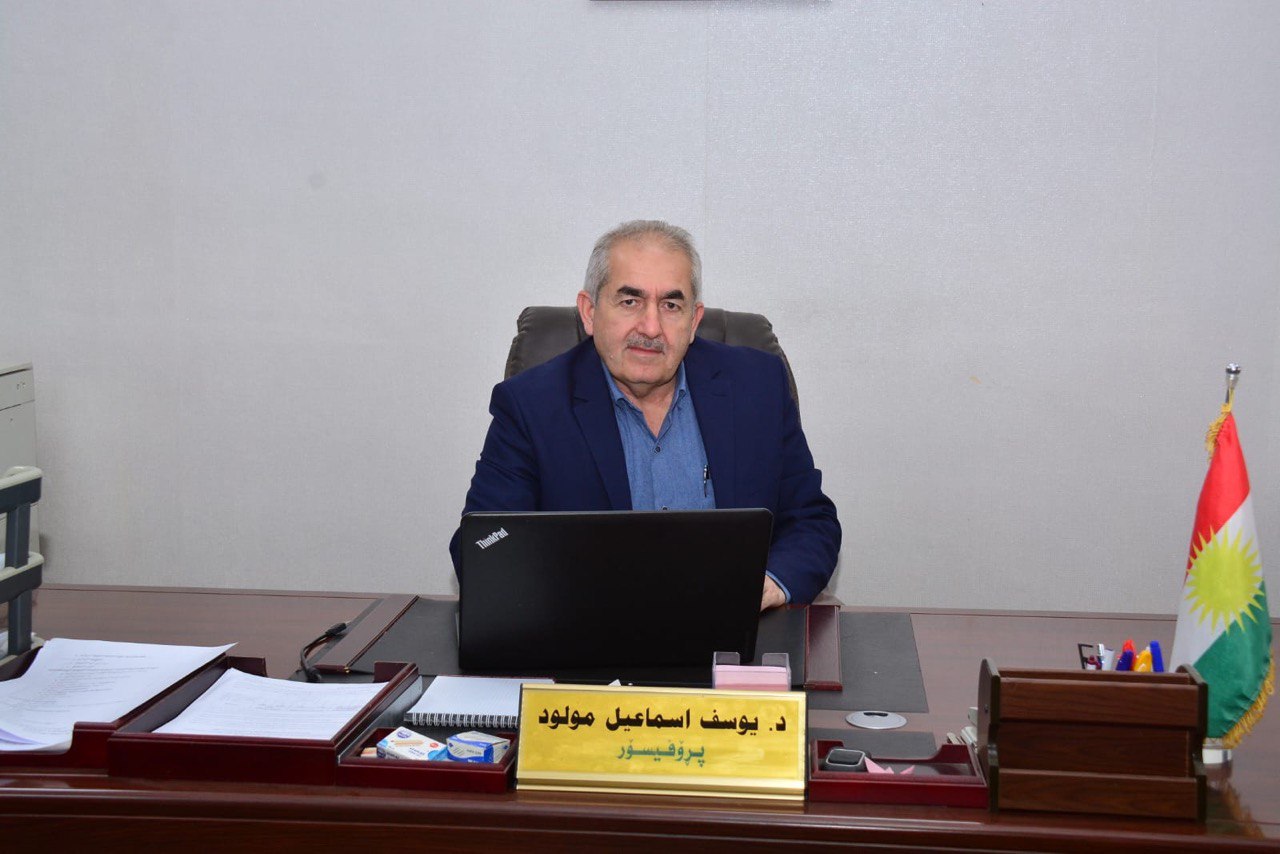
Prof. DR. Yousif Ismael Mawlood
Head of Civil Engineering Deparment
Yousif Ismael Mawlood was born in Kirkuk, Iraq, on 01-12-1968. His residential address is New Zanko Village/Erbil. He received the BSc degree in Civil Engineering during the years 1987/1988 to 1990/1991 at Salahaddin University-Erbil, he received the MSc degree in Civil Engineering/Geotechnical Engineering (Soil Mechanics and Foundation Engineering) during the years 1997 to 2000 at Salahaddin University-Erbil, and he received the PhD degree in Geotechnical Engineering (Soil Mechanics and Foundation Engineering) during the years 2015 to 2020 at Salahaddin University-Erbil.
He obtained the academic title "assistant lecturer" on 30-09-2000 and "lecturer" on 30-07-2007. He achieved the title of assistant professor on 16-2-2015 and professor on 14-5-2021. Since October 2000, he has been with the University of Salahaddin-Erbil/College of Engineering as a lecturer in the Civil Engineering Department. From 12/11/2023 until now, he has been appointed as the head of the Department of Civil Engineering at Salahaddin University-Erbil.
The mission of the Department of Civil Engineering is to provide quality education to prepare nationally competitive undergraduate students for a successful career in civil engineering; to provide advanced skills and knowledge in state-of-the-art research and design in sub-areas of civil engineering for graduate students; and to provide service to the university, engineering profession, and the public. The objectives are:
1-To ensure that graduates will have a mastery of fundamental knowledge, problem-solving skills, engineering experimental abilities, and design capabilities necessary for entering civil engineering career and/or graduate school.
2-To produce graduates that have the knowledge and skills necessary for identifying and assessing design alternatives and the related social, economic, environmental, and public safety impacts.
3-To produce graduates who have verbal and written communication skills necessary for successful professional practice.
4-To prepare graduates to function effectively on teams.
5-To prepare graduates for professional licensure, leadership roles, and life-long learning.
VisionThe Department of Civil Engineering will try to develop internationally prominent educational and research programs to ensure sustainable prosperity and quality of life. The department will also excel in undergraduate and graduate instruction, research in all sub-areas of civil engineering, and service to the public consistently. The Department will make significant contributions to the social development of the region and nation, through our leadership in engineering education.
- Engineering Knowledge: Apply knowledge of mathematics, science, and fundamental engineering principles to analyze and solve civil engineering problems.
- Problem Analysis: Identify, formulate, and analyze complex civil engineering problems using appropriate methods and tools.
- Design and Development of Solutions: Design safe, sustainable, and cost-effective civil engineering solutions that meet societal and environmental needs.
- Investigation and Research Skills: Conduct investigations and interpret data using modern techniques and tools, including modeling and simulations.
- Modern Tool Usage: Apply appropriate techniques, resources, and modern engineering tools (e.g., AutoCAD, ETABS, SAP2000, STAAD Pro, GIS, …) to engineering activities with an understanding of their limitations.
- Ethics and Professional Responsibility: Understand and commit to professional ethics, responsibilities, and the norms of civil engineering practice.
- Communication Skills: Communicate effectively on engineering topics with the engineering community and society at large, through written, oral, and graphical means.
- Project Management and Teamwork: Function effectively as an individual and as a member or leader in diverse teams and in multidisciplinary settings.
- Lifelong Learning: Recognize the need for lifelong learning to stay current with the latest civil engineering trends, tools, and practices.
- Environmental and Social Awareness: Understand the impact of civil engineering solutions in societal and environmental contexts and apply sustainable development principles.
- Health, Safety, and Legal Considerations: Identify and evaluate engineering solutions that consider public health, safety, legal, and cultural implications.
- Innovation and Entrepreneurship: Demonstrate creative thinking and an entrepreneurial mindset in solving civil infrastructure challenges.
- Site Investigation: Site Investigation (also called Subsurface Exploration or Geotechnical Investigation) is a crucial process in construction in civil engineering projects. It involves gathering detailed information about the physical, chemical, and geological characteristics of a site before design and construction begin.
- Surveying
- Perform land surveying using traditional and modern instruments (e.g., total stations, GPS,….).
- Interpret site topography and prepare detailed survey maps.
- Material Testing and Evaluation
- Conduct laboratory tests on construction materials (e.g., concrete, steel, soil, asphalt).
- Analyze and interpret test results to assess compliance with standards.
- Structural Design and Detailing
- Design structural elements (e.g., beams, slabs, columns, foundations) using manual and software-based methods.
- Prepare detailed engineering drawings and reinforcement details.
- Use of Engineering Software: Apply civil engineering software tools such as AutoCAD, ETABS, SAP2000, STAAD Pro, SAFE, and Civil 3D in design, modeling, and analysis tasks.
- Construction Site Practice
- Interpret engineering drawings on-site and supervise execution according to specifications.
- Understand construction sequences, safety measures, and quality control procedures.
- Geotechnical Field Testing
- Perform in-situ soil tests (e.g., SPT, plate load test, field permeability, field Vane shear test) are performed to assess the geotechnical properties of soil directly at the construction site. Bore logs are also prepared to document the soil stratigraphy encountered during the site investigation.
- Analyze subsurface conditions for foundation design and construction
- Project Planning and Management
- Use tools like MS Project or Primavera to schedule, monitor, and manage construction activities.
- Prepare quantity takeoffs, cost estimates, and work breakdown structures.
- Environmental and Water Resource Applications
- Conduct water quality testing and design basic water supply and wastewater systems.
- Apply hydrology and hydraulics principles in practical scenarios (e.g., drainage design, stormwater management).
- Team Collaboration and Communication
- Work effectively in multidisciplinary teams to complete projects and present findings.
- Prepare technical reports, drawings, and presentations for professional settings.
- Internship and Industry Exposure
- Apply academic and practical knowledge during site visits and internships with engineering firms or construction companies.
- Reflect on real-world engineering challenges and ethical considerations.
Civil Department established partnerships with over 20 construction companies through its structured internship program, providing students with practical, real-world experience.
Degree Program Overview
Undergraduate Study
Undergraduate Program (B.Sc. in Civil Engineering)
The Civil Engineering Department is following Bologna system which consists of 8 semesters of 15 weeks each.
For each academic year fall semester starts in September and ends in January, the spring semester starts at February and ends in June.
The courses are divided into core modules (% 75) and elective modules (%25)
And consists of theoretical lectures in classrooms using data show and white bord and practical in the laboratories.
Also, there are different software that is taken for developing modern analysis and design related to civil engineering.
Final course is for graduation project and full course internship in the real projects.
Postgraduate Study
Higher Diploma in Civil Engineering
This program is designed for engineers and professionals who wish to enhance their skills in a shorter time frame.
Duration: 1 academic year (2 semesters)
Modules: the main disciplines of civil engineering courses are taken such as Reinforced concrete design, Highway, Foundation, Structures analysis, Water supply, etc.
- Sc Program
The Master’s program is designed for graduates who want to specialize in advanced areas of civil engineering. The duration is 2 years, includes two coursework and a research-based thesis, and the following are civil engineering M.Sc. disciplines:
- Structural Engineering
- Water and Environmental Engineering
- Geotechnical Engineering
- Transportation Engineering
- Construction Material
- Construction Management
Ph.D. Program
The Ph.D. program is designed for graduates who want to specialize in advanced areas of civil engineering. The duration is 3 years, includes one coursework and a research-based dissertation, and the following are civil engineering Ph.D. disciplines:
- Structural Engineering
- Water and Environmental Engineering
- Geotechnical Engineering
- Transportation Engineering
- Construction Material
- Construction Management
More details about modules descriptions, coursebooks and textbooks could be found at the following link
https://sites.google.com/view/civilengineeringstudymodules/home
Program learning outcome
First Year – Fall Semester
|
# |
Module Code |
Module Name |
Credits |
Module |
pre-request Module Name |
Lecture |
Practical |
Tutorial |
hrs. / week |
|
1 |
SCE103 |
Information Technology |
5 |
Core |
Non |
2 |
2 |
0 |
4 |
|
2 |
SCE104 |
Academic Debate |
5 |
Core |
Non |
2 |
2 |
0 |
4 |
|
3 |
SCE105 |
Kurdology |
4 |
Core |
Non |
4 |
0 |
0 |
4 |
|
4 |
SCE101 |
General English I |
5 |
Core |
Non |
2 |
2 |
0 |
4 |
|
5 |
SCE106 |
Mathematics I |
4 |
Core |
Non |
3 |
0 |
1 |
4 |
|
6 |
SCE130 |
Engineering Mechanics-I |
4 |
Core |
Non |
3 |
0 |
1 |
4 |
|
7 |
SCE108 |
Engineering Drawing |
3 |
Core |
Non |
2 |
2 |
0 |
4 |
First Year – Spring Semester
|
# |
Module Code |
Module Name |
Credits |
Module |
pre-request Module Name |
Lecture |
Practical |
Tutorial |
hrs. / week |
|
1 |
SCE102 |
General English II |
5 |
Core |
Non |
2 |
2 |
0 |
4 |
|
2 |
SCE107 |
Mathematics II |
4 |
Core |
Mathematics I |
3 |
0 |
1 |
4 |
|
3 |
SCE131 |
Engineering Mechanics-II |
4 |
Core |
Engineering Mechanics-I |
3 |
0 |
1 |
4 |
|
4 |
SCE109 |
Engineering Drawing & Descriptive Geometry |
4 |
Core |
Engineering Drawing |
2 |
2 |
0 |
4 |
|
5 |
SCE120 |
Construction Materials |
3 |
Core |
Non |
2 |
2 |
0 |
4 |
|
6 |
SCE501 |
Engineering Statistics |
5 |
Elective |
Non |
2 |
0 |
1 |
3 |
|
7 |
SCE502 |
Engineering Geology |
5 |
Elective |
Non |
2 |
0 |
1 |
3 |
Second Year – Fall Semester
|
# |
Module Code |
Module Name |
Credits |
Module |
pre-request Module Name |
Lecture |
Practical |
Tutorial |
hrs. / week |
|
1 |
SCE230 |
Mechanics of materials I |
5 |
Core |
Engineering Mechanics-II |
3 |
0 |
1 |
4 |
|
2 |
SCE250 |
Fluid Mechanics I |
5 |
Core |
Engineering Mechanics-II |
2 |
2 |
1 |
5 |
|
3 |
SCE210 |
Engineering Surveying |
5 |
Core |
Non |
2 |
2 |
2 |
6 |
|
4 |
SCE220 |
Concrete technology |
5 |
Core |
Non |
2 |
2 |
0 |
4 |
|
5 |
SCE121 |
Building Construction |
5 |
Core |
Non |
3 |
0 |
1 |
4 |
|
6 |
SCE503 |
Environmental Engineering |
5 |
Elective |
Non |
3 |
0 |
1 |
4 |
Second Year – Spring Semester
|
# |
Module Code |
Module Name |
Credits |
Module |
pre-request Module Name |
Lecture |
Practical |
Tutorial |
hrs. / week |
|
1 |
SCE231 |
Mechanics of materials II |
5 |
Core |
Mechanics of materials I |
3 |
0 |
1 |
4 |
|
2 |
SCE251 |
Fluid Mechanics II |
5 |
Core |
Fluid Mechanics I |
2 |
2 |
1 |
5 |
|
3 |
SCE310 |
Engineering Analysis |
5 |
Core |
Mathematics II |
3 |
0 |
1 |
4 |
|
4 |
SCE360 |
Management and Economy |
5 |
Core |
Non |
3 |
0 |
1 |
4 |
|
5 |
SCE520 |
Concrete Construction Engineering |
5 |
Elective |
Concrete technology |
3 |
0 |
1 |
4 |
|
6 |
SCE505 |
Sustainability in Civil Engineering |
5 |
Elective |
Non |
3 |
0 |
1 |
4 |
Third Year – Fall Semester
|
# |
Module Code |
Module Name |
Credits |
Module |
pre-request Module Name |
Lecture |
Practical |
Tutorial |
hrs. / week |
|
1 |
SCE330 |
Structural Analysis I |
5 |
Core |
Mechanics of materials II |
3 |
0 |
1 |
4 |
|
2 |
SCE332 |
Reinforced Concrete I |
5 |
Core |
Mechanics of materials II |
3 |
0 |
1 |
4 |
|
3 |
SCE370 |
Highway Engineering I |
5 |
Core |
Non |
2 |
2 |
1 |
5 |
|
4 |
SCE350 |
Engineering Hydrology |
5 |
Core |
Fluid Mechanics II |
3 |
0 |
1 |
4 |
|
5 |
SCE340 |
Soil Mechanics I |
4 |
Core |
Non |
2 |
2 |
1 |
5 |
|
6 |
SCE |
To be Select |
5 |
Elective |
0 |
0 |
0 |
0 |
4 |
Third Year – Spring Semester
|
# |
Module Code |
Module Name |
Credits |
Module |
pre-request Module Name |
Lecture |
Practical |
Tutorial |
hrs. / week |
|
1 |
SCE331 |
Structural Analysis II |
4 |
Core |
Structural Analysis I |
3 |
0 |
1 |
4 |
|
2 |
SCE333 |
Reinforced Concrete II |
5 |
Core |
Reinforced Concrete I |
3 |
0 |
1 |
4 |
|
3 |
SCE371 |
Highway Engineering II |
4 |
Core |
Highway Engineering I |
2 |
2 |
1 |
5 |
|
4 |
SCE341 |
Soil Mechanics II |
5 |
Core |
Soil Mechanics I |
3 |
2 |
1 |
6 |
|
5 |
SCE351 |
Water Supply Engineering |
5 |
Core |
Fluid Mechanics II |
3 |
2 |
1 |
6 |
|
6 |
SCE |
To be Select |
5 |
Elective |
0 |
0 |
0 |
0 |
4 |
Fourth Year – Fall Semester
|
# |
Module Code |
Module Name |
Credits |
Module |
pre-request Module Name |
Lecture |
Practical |
Tutorial |
hrs. / week |
|
1 |
SCE490 |
Engineering Project I |
5 |
Core |
180 Credits |
1 |
0 |
0 |
1 |
|
2 |
SCE430 |
Design of Reinforced Concrete structures |
5 |
Core |
Reinforced Concrete II |
3 |
0 |
1 |
4 |
|
3 |
SCE431 |
Steel Design |
4 |
Core |
Structural Analysis II |
3 |
0 |
1 |
4 |
|
4 |
SCE470 |
Traffic Engineering |
5 |
Core |
Non |
3 |
0 |
1 |
4 |
|
5 |
SCE |
To be Select |
5 |
Elective |
0 |
0 |
0 |
0 |
4 |
|
6 |
SCE |
To be Select |
5 |
Elective |
0 |
0 |
0 |
0 |
4 |
- Fourth Year – Spring Semester
|
# |
Module Code |
Module Name |
Credits |
Module |
pre-request Module Name |
Lecture |
Practical |
Tutorial |
hrs. / week |
|
1 |
SCE491 |
Engineering Project II |
4 |
Core |
Engineering Project I |
1 |
0 |
0 |
1 |
|
2 |
SCE492 |
Internship |
10 |
Core |
195 Credits |
12 |
0 |
0 |
12 |
|
3 |
SCE440 |
Foundation Engineering |
5 |
Core |
Soil Mechanics II |
3 |
0 |
1 |
4 |
|
4 |
SCE |
To be Select |
5 |
Elective |
0 |
0 |
0 |
0 |
4 |
|
5 |
SCE |
To be Select |
5 |
Elective |
0 |
0 |
0 |
0 |
4 |
|
6 |
SCE |
To be Select |
5 |
Elective |
0 |
0 |
0 |
0 |
4 |
More details about modules descriptions, coursebooks and textbooks could be found at the following link
https://sites.google.com/view/civilengineeringstudymodules/home
Admissions
The Department of Civil Engineering accepts new undergraduate students each academic year through the Kurdistan Region’s Central University Admission System, coordinated by the Ministry of Higher Education and Scientific Research (MHE).
Annual Intake Capacity; total department intake: 100 to 120 students per academic year
Admission Requirements
- Completion of the 12th grade (science stream) or equivalent secondary education.
- Eligibility as determined by the Kurdistan Region's General Directorate of Admissions.
- Students are admitted based on their baccalaureate exam scores and assigned to branches accordingly.
The Civil Department takes pride in creating a large and growing network of successful alumni who have made significant contributions in academia, industry, and public service.
Graduate Employability
The Civil Engineering Department has provided hundreds of qualified engineers who serve the entire Kurdistan region.
These graduates are employed in both the private sector, such as companies, factories, engineering offices, and public sectors, in construction and planning foundations
Academic Advising
The Department of Civil Engineering is committed to supporting student success through a wide range of academic and professional development resources. These services ensure that students are well-prepared to excel during their studies and transition smoothly into their careers.
Internship Opportunities
As part of the curriculum, all undergraduate students complete a mandatory industry internship in their final year. These internships provide hands-on experience in real-world engineering environments and serve as a bridge between academic learning and professional practice.
The department works closely with public and private sector organizations to coordinate placement opportunities and ensure alignment with students' areas of specialization.
Career Services
The Civil Department is committed to supporting students' transition from academic life to professional practice through dedicated career services. Our goal is to empower students with the tools, knowledge, and connections needed to build successful and fulfilling careers in the fields.