
Electrical Engineering
Welcome to Department of Electrical Engineering. We are one of the oldest department of the College of Engineering at Salahddin University-Erbil. The faculty members are dedicated scholars committed to the advancement of knowledge. They are also dedicated lecturers of undergraduate and graduate students. Many of our faculty have graduated in the western countries, and some others from Asian countries.
Our faculty members are active researchers that publish their works in major international journals and conferences. Our distinctive four-year undergraduate degree program leads to an accredited Bachelor of Science in Engineering Degree. The first and second years focus on the fundamental courses of electrical science, while the third and fourth years emphasis on the three disciplines: Electronics and Communications Engineering, Power Engineering, and Computer and Control Engineering. Each of these fields provides a specific specialist degree for undergraduate students. Our graduate program emphasizes the highest quality in graduate education and research. The main component of the program, the Doctoral of Philosophy (PhD) program, prepares students for a variety of careers in research, teaching, and advanced development. The program is intimately connected to our research program and emphasizes forward-looking research fields. Also, our department offer a two-year research based Master of Science (MSc) program. Both programs are designated for multiple different areas such as Communication Engineering, Power Engineering, Computer and Control Engineering, Robotics, etc.
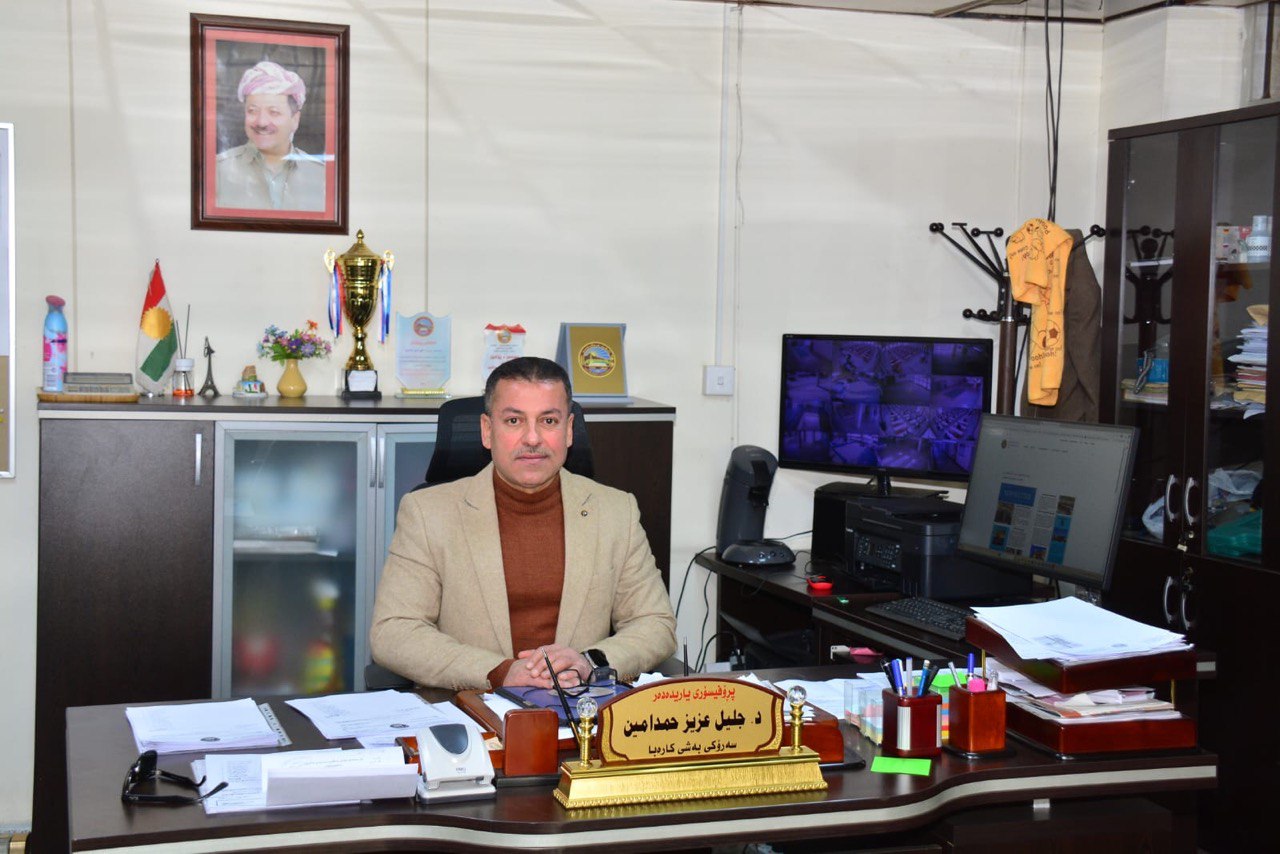
Name: Assistant Prof. Dr. Jalil Aziz Hamadam
Title: Head of Electrical Engineering Department Assistant Prof. Dr. Jalil Aziz Hamadam
Contact Information:
Email: [email protected]
Phone:
Office: Head of Department
Social Links: https://academics.su.edu.krd/jalil.hamadamin
Assistant Prof. Dr. Jalil Aziz Hamadam Welcome to the Department of Electrical Engineering Website. I encourage our students to browse these pages, where they find detail information about our undergraduate and graduate educational programs, our faculty members, their research programs, and the broad range of activities underway in the Department. Electrical Engineering is a vibrant department that has changed the world in which we live and work. At the beginning of this new century, the discipline is poised to continue making important contributions to key issues facing society in areas such as electricity, computing, controlling, networking, communication, digital system design, power systems, renewable energy systems, information technology, etc. We strive to be at the forefront of research, to educate our students in core fundamentals, and to engage students with emerging technologies and their applications. Our intending is to keep close interaction between faculty and students at all levels. The education and research missions in out department are enhanced by excellent collaborations with the deanery and all other departments in the College of Engineering. I hope that you will explore our programs and research interests of the faculty. We are always interested in new opportunities for collaboration, and new ideas for our talent students.
Our mission in the electrical engineering department is to deliver knowledge among students through a contemporary curriculum and modern pedagogical methods in disciplines related to electrical engineering. We help students develop skills in solving complex engineering problems of modern times and to provide a framework for promoting collaborative and multidisciplinary activities.
VisionOur vision in the electrical engineering department is to develop effective and capable electrical engineers that can serve the future needs and challenges of our society. We also focus on becoming a preferred partner in the area of collaborative research among national and international organizations.
Department of Electrical Engineering – Learning Outcomes Graduates of the Electrical Engineering Department at Salahaddin University-Erbil will be able to: 1. Core Engineering Knowledge
• Demonstrate a strong foundation in mathematics, physics, and electrical engineering principles relevant to circuit theory, electronics, electromagnetics, and control systems.
• Apply knowledge of electrical circuits, signal processing, programming, and engineering mechanics across diverse problem domains.
2. Specialization Proficiency• Power and Renewable Energy: Analyze, design, and operate systems related to power generation, transmission, distribution, renewable energy technologies, and power electronics.
• Computer and Control: Develop, implement, and evaluate computer-based systems, embedded systems, control systems, and automation technologies.
• Electronics and Communication: Design and analyze analog/digital communication systems, signal processing systems, antennas, and wireless communication networks.
3. Technical and Practical Skills• Use engineering tools and software such as CAD, MATLAB, and programming languages (e.g., C++, Java, Python) to simulate, design, and test electrical systems.
• Conduct laboratory experiments and interpret data to validate theoretical concepts and engineering models.
4. Problem Solving and Critical Thinking• Identify, formulate, and solve complex engineering problems using analytical and computational methods.
• Integrate interdisciplinary knowledge and apply systems thinking in designing effective and efficient engineering solutions.
5. Innovation and Research• Engage in applied research, innovation, and development of new technologies in electrical engineering fields.
• Prepare and conduct independent projects, including a final year engineering project and internship that integrates academic learning with real-world application.
6. Communication and Teamwork• Communicate technical information effectively in both written and oral forms, in English and Kurdish.
• Collaborate in multidisciplinary teams, demonstrating leadership and project management skills.
7. Ethics and Professional Responsibility• Understand and uphold professional, ethical, legal, and social responsibilities in engineering practice.
• Promote sustainable practices and consider environmental impacts in engineering solutions, especially in power and renewable energy applications.
8. Lifelong Learning and Adaptability• Recognize the need for lifelong learning and pursue continuous professional development.
• Stay updated with emerging technologies such as artificial intelligence, IoT, smart grids, and cybersecurity in engineering contexts.
Karlsruhe University of Applied Sciences, Germany
International Student Exchange Partnership with Karlsruhe University of Applied Sciences, Germany:
The Electrical Engineering Department at Salahaddin University-Erbil maintains an academic partnership with Karlsruhe University of Applied Sciences (Hochschule Karlsruhe – Technik und Wirtschaft) in Germany. This collaboration is established through a formal student exchange agreement, enabling students from both institutions to benefit from international academic experiences. The partnership reflects the department's commitment to fostering global engagement and enhancing the educational and cultural development of its students through international cooperation.
Undergraduate Study
The Department of Electrical Engineering at Salahaddin University-Erbil offers three distinct undergraduate programs under the Bologna Process framework. Each program leads to the award of a Bachelor of Science (B.Sc.) in Electrical Engineering, with specialization in one of the following branches:
- Power and Renewable Energy Engineering
- Computer and Control Engineering
- Electronics and Communication Engineering
Each undergraduate program spans four academic years (eight semesters) and is designed to provide a balance between theoretical knowledge, practical skills, and industry-oriented learning. The curriculum includes core modules, elective modules, project work, and an internship, all aimed at preparing graduates for careers in engineering, industry, research, and higher education.
- Power and Renewable Energy Engineering
This branch focuses on the generation, transmission, distribution, and efficient utilization of electric power, with an emphasis on modern renewable energy technologies.
Key areas include:
- Electrical Machines and Power Systems
- Power Electronics and Smart Grids
- Renewable Energy Sources (Solar, Wind, Distributed Generation)
- High Voltage Engineering and Electrical Installations
- Control Systems and Power System Protection
Graduates are prepared to work in electric utilities, renewable energy sectors, industrial power systems, or pursue advanced studies in energy systems and sustainability.
- Computer and Control Engineering
This program emphasizes embedded systems, computer engineering, automation, and intelligent control technologies. It integrates computing with system control and design for modern applications.
Key areas include:
- Programming and Object-Oriented Design
- Embedded Systems and Microcontrollers
- Industrial Automation and Robotics
- Digital Signal Processing and Control Engineering
- Artificial Intelligence and Cybersecurity
Graduates can pursue careers in software development, embedded system design, automation engineering, or continue with postgraduate research in computing and intelligent systems.
- Electronics and Communication Engineering
This branch equips students with in-depth knowledge in analog and digital electronics, signal processing, and modern communication technologies including wireless and optical systems.
Key areas include:
- Analog/Digital Communication Systems
- Antennas, Microwave, and Optical Communication
- Integrated Circuit Design and VLSI
- Wireless Sensor Networks and Internet of Things
- Signal Processing and Cybersecurity
Graduates are qualified for careers in telecommunications, consumer electronics, integrated system design, or can pursue graduate studies in electronics and communication.
Program Structure
Each program follows the Bologna Process and includes:
- Core Modules: Fundamental sciences and electrical engineering topics.
- Elective Modules: Specialized courses tailored to each branch.
- Engineering Project (8th semester): Capstone project demonstrating applied skills.
- Internship (8th semester): Practical experience in industry or research.
- Complementary Modules: Optional enrichment courses in cutting-edge topics.
Graduate Profile
Upon completion of their program, graduates will be capable of:
- Applying engineering principles in practical and theoretical contexts.
- Utilizing modern tools and technologies for design and analysis.
- Communicating effectively and working collaboratively in multidisciplinary teams.
- Practicing ethically and responsibly with a commitment to sustainability and innovation.
Postgraduate Study
The Department of Electrical Engineering at Salahaddin University-Erbil offers a structured and advanced postgraduate academic track through Doctor of Philosophy (Ph.D.), Master of Science (M.Sc.), and Higher Diploma programs. These programs aim to cultivate highly qualified researchers, academics, and professional engineers equipped to address complex challenges in electrical and electronic systems, automation, computing, and communication technologies.
Doctor of Philosophy (Ph.D.) Program
Duration: 3 years
The Ph.D. program is a research-intensive degree that provides scholars with advanced knowledge and tools for innovation, critical analysis, and contribution to scientific advancement in electrical engineering. The program is offered in three major specialization tracks:
- Communication Engineering
- Advanced Computer Network
- Wireless Communication
- Advanced Statistics and Algorithms
- Advanced Research Methodology
- Beamforming
- Heterogeneous Networks
- Computer and Control Engineering
- Robotics
- Nonlinear System
- Robust Control
- Advanced Statistics and Algorithms
- Advanced Computer Networking
- Advanced Research Methodology
- Power Engineering
- Generalized Machine Theory
- Advanced Statistics and Algorithms
- Advanced Research Methodology
- Renewable Energies
- Engineering Metrology
- Power System Operation and Control
Each track culminates in the completion of original research work and the submission of a doctoral dissertation.
Master of Science (M.Sc.) Program
Duration: 2 years
The M.Sc. program combines advanced coursework and supervised research to deepen students' understanding and prepare them for professional practice or further academic study.
- Electronics and Communication Engineering
- Core Subjects:
- Research Methodology
- Statistics and Optimization Techniques
- Advanced Mathematics
- Active Network Synthesis
- Optical Communication
- Communication Circuits
- Digital Signal Processing
- MIMO Systems
- Wideband Communication Systems
- Electives:
- Mobile Communication
- Additive Manufacturing
- Power Engineering
- Core Subjects:
- Research Methodology
- Electrical Machine Design
- Advanced Mathematics
- Statistics and Optimization Techniques
- Power System Analysis
- Programmable Logic Controller (PLC)
- Power System Distribution Planning and Design
- Machine Learning
- Power System Reliability
- Electives:
- Advanced Computer Internetworking
- Optimization Techniques
- Additive Manufacturing
- Computer and Control Engineering
- Core Subjects:
- Research Methodology
- Advanced Computer and Internetworking
- Programmable Logic Controller (PLC)
- Advanced Mathematics
- Real-Time Embedded Systems
- Statistics and Optimization Techniques
- Design of Feedback Control System
- Advanced Industrial Automation
- Computer Vision
- Electives:
- Advanced Computer Internetworking
- Machine Learning
- Optimization Techniques
Students in the M.Sc. program are required to conduct a research project and submit a thesis under faculty supervision.
Higher Diploma Program
Duration: 1 year
The Higher Diploma is designed for graduates and professionals seeking to upgrade their technical skills and knowledge in electrical engineering disciplines. The program covers a broad range of applied engineering topics.
Core Courses:
- Engineering Mathematics
- Computer Networking
- Industrial Automation
- System Modeling
- Coding Techniques
- Electrical Power Quality
- Digital Systems
- Electrical Drive Systems
- Network Subnetting
- Advanced Control Systems
Electives:
- Advanced Automation Technologies
- Instrumentation and Measurements
|
Salahaddin University-Erbil College of Engineering Department of Electrical Engineering List of Study Program Modules: Power Engineering and Renewable Energy First semester 2024-2025 |
|||||||||
|
Code |
Module Name |
Prerequisite |
Total Hours/ Week |
Lecture |
Practical |
Tutorial |
Module Total Credit |
Recommended Semester/term |
|
|
2105 |
Electrical Circuits I |
core |
None |
6 |
3 |
2 |
1 |
6 |
1 |
|
0107 |
Math I |
core |
None |
4 |
3 |
|
1 |
5 |
1 |
|
0101 |
General English I |
core |
None |
4 |
2 |
2 |
|
5 |
1 |
|
0103 |
Information Technology |
core |
None |
4 |
2 |
2 |
|
5 |
1 |
|
2101 |
Algorithm and Problem Solving |
core |
None |
2 |
2 |
|
|
4 |
2 |
|
0104 |
Academic Debate |
core |
None |
4 |
4 |
|
|
5 |
2 |
Second semester
|
2106 |
Electrical Circuits II |
core |
2105 |
6 |
3 |
2 |
1 |
6 |
2 |
|
2111 |
Physical Electronics |
core |
None |
3 |
3 |
|
|
5 |
2 |
|
0108 |
Math II |
core |
0107 |
4 |
3 |
|
1 |
5 |
2 |
|
2107 |
Electrical CAD |
core |
None |
3 |
1 |
2 |
|
5 |
1 |
|
0102 |
General English II |
core |
None |
4 |
2 |
2 |
|
5 |
2 |
|
0105 |
Kurdology |
core |
None |
4 |
4 |
|
|
4 |
1 |
Third semester
|
0109 |
Math III |
core |
0108 |
4 |
3 |
|
1 |
5 |
3 |
|
2113 |
Network Analysis I |
core |
2105, 2106 |
3 |
3 |
|
|
5 |
3 |
|
2122 |
Principles of Electrical Machines |
core |
None |
5 |
3 |
2 |
1 |
6 |
3 |
|
2123 |
Analogue Electronics |
core |
None |
6 |
3 |
2 |
|
5 |
3 |
|
2102 |
Engineering Mechanics |
core |
None |
3 |
3 |
|
|
5 |
3 |
|
2116 |
Electromagnetics |
core |
None |
2 |
2 |
|
|
4 |
3 |
Forth semester
|
0110 |
Math IV |
core |
0109 |
4 |
3 |
|
1 |
5 |
4 |
|
2118 |
Network Analysis II |
core |
2113 |
3 |
3 |
|
|
5 |
4 |
|
2124 |
Direct Current Machines |
core |
None |
4 |
2 |
2 |
|
5 |
4 |
|
2125 |
Digital Electronics |
core |
None |
5 |
3 |
2 |
|
5 |
4 |
|
2104 |
Computer Programming |
core |
None |
3 |
2 |
2 |
|
5 |
4 |
|
2127 |
Probability and Statistics |
core |
None |
3 |
2 |
|
1 |
5 |
4 |
Fifth semester
|
0111 |
Engineering Analysis |
core |
None |
4 |
3 |
|
1 |
5 |
5 |
|
2135 |
Power Generation |
core |
None |
4 |
2 |
2 |
|
5 |
5 |
|
2133 |
AC Machines I |
core |
None |
5 |
3 |
2 |
|
5 |
5 |
|
Three Modules from The List |
|||||||||
|
2134 |
Power Electronics |
core |
None |
4 |
2 |
2 |
|
5 |
5 |
|
2199 |
Smart Meters |
elective |
None |
3 |
3 |
|
|
5 |
5 |
|
2188 |
Embedded Technology |
elective |
None |
4 |
2 |
2 |
|
5 |
5 |
|
2175 |
Thermodynamics |
elective |
None |
3 |
3 |
|
|
5 |
5 |
|
2115 |
Computer Networks |
elective |
None |
3 |
2 |
|
1 |
5 |
5 |
|
2158 |
Distributed Generation |
elective |
None |
3 |
2 |
|
1 |
5 |
5 |
Sixth semester
|
2136 |
Renewable Energies |
core |
None |
4 |
2 |
2 |
|
5 |
6 |
|
2138 |
AC Machines II |
core |
None |
5 |
3 |
2 |
|
5 |
6 |
|
2140 |
Power Transmission and Distribution |
core |
None |
5 |
3 |
2 |
|
5 |
6 |
|
Three Modules from The List |
|||||||||
|
2157 |
Electrical Installation and Design |
core |
None |
4 |
2 |
2 |
|
5 |
6 |
|
2186 |
Electricity Economics and Marketing |
elective |
None |
3 |
3 |
|
|
5 |
6 |
|
2145 |
Industrial Automation |
elective |
None |
4 |
2 |
2 |
|
5 |
6 |
|
2123 |
Servo Control Systems |
elective |
None |
3 |
3 |
|
|
5 |
6 |
|
2141 |
Electric Drives |
elective |
None |
3 |
3 |
|
|
5 |
6 |
|
2142 |
High Voltage Engineering |
elective |
None |
3 |
3 |
|
|
5 |
6 |
Seventh semester
|
2144 |
Control Engineering |
core |
None |
3 |
3 |
|
|
5 |
7 |
|
2155 |
Power System Analysis |
core |
None |
3 |
2 |
|
1 |
5 |
7 |
|
2197 |
Project Management |
core |
None |
3 |
3 |
|
|
5 |
7 |
|
Three Modules from The List |
|||||||||
|
2139 |
Smart Grids |
core |
None |
3 |
3 |
|
|
5 |
7 |
|
2147 |
Internet of Things |
elective |
None |
3 |
3 |
|
|
5 |
7 |
|
2177 |
Artificial Intelligence |
elective |
None |
3 |
3 |
|
|
5 |
7 |
|
2148 |
Robotics |
elective |
None |
5 |
2 |
2 |
1 |
5 |
7 |
|
2156 |
Special Electrical Machines |
elective |
None |
5 |
2 |
2 |
1 |
5 |
7 |
|
2158 |
Power System Protection |
elective |
None |
5 |
2 |
2 |
1 |
5 |
7 |
Semester eight
|
2160 |
Engineering Project |
core |
None |
8 |
8 |
|
|
12 |
8 |
|||||||||
|
2161 |
Internships |
core |
None |
10 |
10 |
|
|
18 |
8 |
|||||||||
|
Complementary Elective Modules |
|
|
||||||||||||||||
|
21001 |
System Engineering |
None |
2 |
2 |
|
|
5 |
7 |
||||||||||
|
2119 |
Modeling and Simulation |
None |
2 |
2 |
|
|
5 |
7 |
||||||||||
|
2193 |
Micro-Electro-Mechanical systems (MEMS) |
None |
2 |
2 |
|
|
5 |
7 |
||||||||||
|
2185 |
Electric Power Quality |
None |
2 |
2 |
|
|
5 |
7 |
||||||||||
|
21315 |
Digital Protection |
None |
2 |
2 |
|
|
5 |
7 |
||||||||||
|
2196 |
Power System Operation & Control |
None |
2 |
2 |
|
|
5 |
7 |
||||||||||
|
21317 |
FACTS Devices |
None |
2 |
2 |
|
|
5 |
7 |
||||||||||
|
2199 |
Smart Meters |
None |
2 |
2 |
|
|
5 |
7 |
||||||||||
|
Salahaddin University-Erbil College of Engineering Department of Electrical Engineering List of Study Program Modules: Electronics and Communication Engineering (EC) First semester 2024-2025 |
|||||||||
|
Code |
Module Name |
Prerequisite |
Total Hours/ Week |
Lecture |
Practical |
Tutorial |
Module Total Credit |
Recommended Semester/term |
|
|
2105 |
Electrical Circuits I |
core |
None |
6 |
3 |
2 |
1 |
6 |
1 |
|
0107 |
Math I |
core |
None |
4 |
3 |
|
1 |
5 |
1 |
|
0101 |
General English I |
core |
None |
4 |
2 |
2 |
|
5 |
1 |
|
0103 |
Information Technology |
core |
None |
4 |
2 |
2 |
|
5 |
1 |
|
0104 |
Academic Debate |
core |
None |
4 |
4 |
|
|
5 |
2 |
|
2101 |
Algorithm and Problem Solving |
core |
None |
2 |
2 |
|
|
4 |
2 |
Second semester
|
2106 |
Electrical Circuits II |
core |
2105 |
6 |
3 |
2 |
1 |
6 |
2 |
|
2111 |
Physical Electronics |
core |
None |
3 |
3 |
|
|
5 |
2 |
|
0108 |
Math II |
core |
0107 |
4 |
3 |
|
1 |
5 |
2 |
|
2107 |
Electrical CAD |
core |
None |
3 |
1 |
2 |
|
5 |
1 |
|
0102 |
General English II |
core |
None |
4 |
2 |
2 |
|
5 |
2 |
|
0105 |
Kurdology |
core |
None |
4 |
4 |
|
|
4 |
1 |
Third semester
|
0109 |
Math III |
core |
0108 |
4 |
3 |
|
1 |
5 |
3 |
|
2113 |
Network Analysis I |
core |
2105, 2106 |
3 |
3 |
|
|
5 |
3 |
|
2122 |
Principles of Electrical Machines |
core |
None |
5 |
3 |
2 |
|
6 |
3 |
|
2123 |
Analogue Electronics |
core |
None |
6 |
3 |
2 |
1 |
5 |
3 |
|
2102 |
Engineering Mechanics |
core |
None |
3 |
3 |
|
|
5 |
3 |
|
2116 |
Electromagnetics |
core |
None |
2 |
2 |
|
|
4 |
3 |
Forth semester
|
0110 |
Math IV |
core |
0109 |
4 |
3 |
|
1 |
5 |
4 |
|
2118 |
Network Analysis II |
core |
2113 |
3 |
3 |
|
|
5 |
4 |
|
2124 |
Direct Current Machines |
core |
None |
5 |
2 |
2 |
|
5 |
4 |
|
2125 |
Digital Electronics |
core |
None |
5 |
3 |
2 |
|
5 |
4 |
|
2104 |
Computer Programming |
core |
None |
3 |
2 |
2 |
|
5 |
4 |
|
2127 |
Probability and Statistics |
core |
None |
3 |
2 |
|
1 |
5 |
4 |
Fifth semester
|
0111 |
Engineering Analysis |
core |
None |
4 |
3 |
|
1 |
5 |
5 |
|
||
|
2127 |
Communication Engineering |
core |
None |
5 |
3 |
2 |
|
5 |
5 |
|
||
|
2139 |
Wave Propagation |
core |
None |
3 |
3 |
|
|
5 |
5 |
|
||
|
Three Modules from this list |
|
elective |
None |
|||||||||
|
2170 |
Signals and Systems |
elective |
None |
3 |
2 |
2 |
|
5 |
5 |
|
||
|
2115 |
Computer Networks |
core |
None |
3 |
3 |
|
|
5 |
5 |
|
||
|
2117 |
Computer Architecture |
elective |
Nine |
5 |
3 |
2 |
|
5 |
5 |
|
||
|
2120 |
Object Oriented Programming |
elective |
None |
4 |
2 |
2 |
|
5 |
5 |
|
||
|
2126 |
Numerical Analysis |
elective |
None |
3 |
1 |
2 |
|
5 |
5 |
|
||
|
2134 |
Power Electronics |
elective |
None |
5 |
3 |
2 |
|
5 |
5 |
|
||
Sixth semester
|
2116 |
Digital System Design |
core |
None |
5 |
3 |
2 |
|
5 |
6 |
|
2129 |
Antenna |
core |
None |
3 |
3 |
|
|
5 |
6 |
|
2150 |
Information and Coding Theory |
core |
None |
3 |
3 |
|
|
5 |
6 |
|
Three Modules from this list |
|||||||||
|
2121 |
Microcontrollers |
elective |
None |
5 |
3 |
2 |
|
5 |
6 |
|
2136 |
Digital State Machines |
core |
None |
3 |
3 |
|
|
5 |
6 |
|
2151 |
Digital Signal Processing |
elective |
None |
5 |
3 |
2 |
|
5 |
6 |
|
21005 |
Wireless Sensor Networks |
elective |
None |
3 |
3 |
|
|
5 |
6 |
|
2125 |
Analog IC Design |
elective |
None |
5 |
3 |
2 |
|
5 |
6 |
|
21321 |
Cybersecurity |
elective |
None |
3 |
3 |
|
|
5 |
6 |
Seventh semester
|
2130 |
Digital Communication |
core |
None |
5 |
3 |
2 |
|
5 |
7 |
|
2152 |
Optical Communication |
core |
None |
3 |
3 |
|
|
5 |
7 |
|
2132 |
Project Management |
core |
None |
3 |
3 |
|
|
5 |
7 |
|
Three Modules from this list |
|||||||||
|
2144 |
Control Engineering |
core |
None |
3 |
3 |
|
|
5 |
7 |
|
2177 |
Artificial Intelligence |
elective |
None |
4 |
2 |
2 |
|
5 |
7 |
|
2131 |
Microelectronics |
elective |
None |
3 |
3 |
|
|
5 |
7 |
|
21004 |
Wireless Communication |
elective |
None |
5 |
3 |
2 |
|
5 |
7 |
|
2153 |
Microwave Engineering |
elective |
None |
3 |
3 |
|
|
5 |
7 |
|
2147 |
Internet of Things |
elective |
None |
3 |
3 |
2 |
|
5 |
7 |
|
2129 |
Engineering Project |
core |
None |
8 |
8 |
|
|
12 |
8 |
|||||||||
|
2130 |
Internships |
core |
None |
10 |
10 |
|
|
18 |
8 |
|||||||||
|
Complementary Elective Modules |
|
|
||||||||||||||||
|
21112 |
Biomedical Engineering |
None |
2 |
2 |
|
|
5 |
7 |
|
|||||||||
|
21113 |
Quantum Computing |
None |
2 |
2 |
|
|
5 |
7 |
|
|||||||||
|
21114 |
Cloud Computing |
None |
2 |
2 |
|
|
5 |
7 |
|
|||||||||
|
21115 |
CNC Programming |
None |
2 |
2 |
|
|
5 |
7 |
|
|||||||||
|
21116 |
Modeling and Simulation |
None |
2 |
2 |
|
|
5 |
7 |
|
|||||||||
|
21122 |
Neural Networks and Fuzzy Logic |
None |
2 |
2 |
|
|
5 |
7 |
|
|||||||||
|
21123 |
Web Technology |
None |
2 |
2 |
|
|
5 |
7 |
|
|||||||||
|
21124 |
Web Engineering |
None |
2 |
2 |
|
|
5 |
7 |
|
|||||||||
|
21210 |
Integrated Electronics |
None |
2 |
2 |
|
|
5 |
7 |
|
|||||||||
|
21211 |
Nano Technology |
None |
2 |
2 |
|
|
5 |
7 |
|
|||||||||
|
21212 |
Semiconductor Devices |
None |
2 |
2 |
|
|
5 |
7 |
|
|||||||||
|
21213 |
VLSI Design |
None |
2 |
2 |
|
|
5 |
7 |
|
|||||||||
|
21320 |
Human Robot interaction |
None |
2 |
2 |
|
|
5 |
7 |
|
|||||||||
|
21322 |
Communication circuits |
None |
2 |
2 |
|
|
5 |
7 |
|
|||||||||
Semester eight
|
Salahaddin University College of Engineering Department of Electrical Engineering List of Study Program Modules: Computer and Control Engineering (CC) First semester 2024-2025 |
|||||||||
|
Code |
Module Name |
Prerequisite |
Total Hours/ Week |
Lecture |
Practical |
Tutorial |
Module Total Credit |
Recommended Semester/term |
|
|
2105 |
Electrical Circuits I |
core |
None |
6 |
3 |
2 |
1 |
6 |
1 |
|
0107 |
Math I |
core |
None |
4 |
3 |
|
1 |
5 |
1 |
|
0101 |
General English I |
core |
None |
4 |
2 |
2 |
|
5 |
1 |
|
0103 |
Information Technology |
core |
None |
4 |
2 |
2 |
|
5 |
1 |
|
2101 |
Algorithm and Problem Solving |
core |
None |
2 |
2 |
|
|
4 |
2 |
|
0104 |
Academic Debate |
core |
None |
4 |
4 |
|
|
5 |
2 |
Second semester
|
2106 |
Electrical Circuits II |
core |
2105 |
6 |
3 |
2 |
1 |
6 |
2 |
|
2111 |
Physical Electronics |
core |
None |
3 |
3 |
|
|
5 |
2 |
|
0108 |
Math II |
core |
0107 |
4 |
3 |
|
1 |
5 |
2 |
|
2107 |
Electrical CAD |
core |
None |
3 |
1 |
2 |
|
5 |
1 |
|
0102 |
General English II |
core |
None |
4 |
2 |
2 |
|
5 |
2 |
|
0105 |
Kurdology |
core |
None |
4 |
4 |
|
|
4 |
1 |
Third semester
|
0109 |
Math III |
core |
0108 |
4 |
3 |
|
1 |
5 |
3 |
|
2113 |
Network Analysis I |
core |
2105, 2106 |
3 |
3 |
|
|
5 |
3 |
|
2122 |
Principles of Electrical Machines |
core |
None |
5 |
3 |
2 |
1 |
6 |
3 |
|
2123 |
Analogue Electronics |
core |
None |
6 |
3 |
2 |
1 |
5 |
3 |
|
2102 |
Engineering Mechanics |
core |
None |
3 |
3 |
|
|
5 |
3 |
|
2116 |
Electromagnetics |
core |
None |
2 |
2 |
|
|
4 |
3 |
Forth semester
|
0110 |
Math IV |
core |
0109 |
4 |
3 |
|
1 |
5 |
4 |
|
2118 |
Network Analysis II |
core |
2113 |
3 |
3 |
|
|
5 |
4 |
|
2124 |
Direct Current Machines |
core |
None |
5 |
2 |
2 |
|
5 |
4 |
|
2125 |
Digital Electronics |
core |
None |
5 |
3 |
2 |
|
5 |
4 |
|
2104 |
Computer Programming |
core |
None |
3 |
2 |
2 |
|
5 |
4 |
|
2127 |
Probability and Statistics |
core |
None |
3 |
2 |
|
1 |
5 |
4 |
Fifth semester
|
0111 |
Engineering Analysis |
core |
None |
4 |
3 |
|
1 |
5 |
5 |
|
2138 |
Computer Networks |
core |
None |
3 |
2 |
|
1 |
5 |
5 |
|
21100 |
Object Oriented Programming |
core |
None |
4 |
2 |
2 |
|
5 |
5 |
|
Three Modules From The List |
|||||||||
|
2134 |
Power Electronics |
elective |
None |
5 |
2 |
2 |
|
5 |
5 |
|
2140 |
Computer Architecture |
core |
None |
5 |
3 |
2 |
|
5 |
5 |
|
2170 |
Signals and Systems |
elective |
None |
3 |
2 |
2 |
|
5 |
5 |
|
2123 |
Servo Systems |
elective |
None |
4 |
2 |
2 |
|
5 |
5 |
|
2126 |
Numerical Analysis |
elective |
None |
3 |
1 |
2 |
|
5 |
5 |
|
2127 |
Communication Engineering |
elective |
None |
5 |
3 |
2 |
|
5 |
5 |
Sixth semester
|
2151 |
Digital Signal Processing |
core |
None |
5 |
3 |
2 |
|
5 |
6 |
|
2145 |
Industrial Automation |
core |
None |
5 |
2 |
2 |
|
5 |
6 |
|
2187 |
Embedded Systems |
core |
None |
3 |
3 |
|
|
5 |
6 |
|
Three Modules From The List |
|||||||||
|
2121 |
Microcontrollers |
core |
None |
5 |
3 |
2 |
|
5 |
6 |
|
21003 |
Web Programming |
elective |
None |
4 |
2 |
2 |
|
5 |
6 |
|
2150 |
Information and Coding Theory |
elective |
None |
3 |
3 |
|
|
5 |
6 |
|
2146 |
Real Time Embedded Systems |
elective |
None |
4 |
2 |
2 |
|
5 |
6 |
|
2134 |
Computer and Network Security |
elective |
None |
3 |
3 |
|
|
5 |
6 |
|
2139 |
Digital System Design |
elective |
None |
5 |
3 |
2 |
|
5 |
6 |
Seventh semester
|
2144 |
Control Engineering |
core |
None |
3 |
3 |
|
|
5 |
7 |
|
2148 |
Robotics |
core |
None |
5 |
2 |
2 |
1 |
5 |
7 |
|
2132 |
Project Management |
core |
None |
3 |
3 |
|
|
5 |
7 |
|
Three Modules From The List |
|||||||||
|
2147 |
Internet of Things |
core |
None |
3 |
3 |
|
|
5 |
7 |
|
2172 |
Software Engineering |
elective |
None |
3 |
3 |
|
|
5 |
7 |
|
2177 |
Artificial Intelligence |
elective |
None |
4 |
2 |
2 |
|
5 |
7 |
|
2178 |
Biomedical Engineering |
elective |
None |
3 |
3 |
|
|
5 |
7 |
|
2179 |
Cloud Computing |
elective |
None |
3 |
3 |
|
|
5 |
7 |
|
21321 |
Cybersecurity |
elective |
None |
3 |
3 |
|
|
5 |
7 |
|
2129 |
Engineering Project |
core |
None |
8 |
8 |
|
|
12 |
8 |
|||||||||||||||||
|
2130 |
Internships |
core |
None |
10 |
10 |
|
|
18 |
8 |
|||||||||||||||||
|
Complementary Elective Modules |
|
|
||||||||||||||||||||||||
|
2134 |
Computer and Network Security |
None |
2 |
2 |
|
|
5 |
7 |
|
|||||||||||||||||
|
|
2136 |
Digital State Machines |
None |
2 |
2 |
|
|
5 |
7 |
|||||||||||||||||
|
21117 |
Computer Vision |
None |
2 |
2 |
|
|
5 |
7 |
|
|||||||||||||||||
|
21121 |
Micro-Electro-Mechanical systems (MEMS) |
None |
2 |
2 |
|
|
5 |
7 |
|
|||||||||||||||||
|
21122 |
Neural Networks and Fuzzy Logic |
None |
2 |
2 |
|
|
5 |
7 |
|
|||||||||||||||||
|
21320 |
Human Robot interaction |
None |
2 |
2 |
|
|
5 |
7 |
|
|||||||||||||||||
Semester eight
Admissions Details
Department of Electrical Engineering
College of Engineering – Salahaddin University-Erbil
The Department of Electrical Engineering accepts new undergraduate students each academic year through the Kurdistan Region’s Central University Admission System, coordinated by the Ministry of Higher Education and Scientific Research (MHE).
The department offers three specialized branches within its Bachelor of Science (B.Sc.) degree programs:
- Power and Renewable Energy Engineering
- Computer and Control Engineering
- Electronics and Communication Engineering
Each branch provides students with a focused and comprehensive education tailored to industry and research needs in its respective field.
Annual Intake Capacity
- Total department intake: 75 to 120 students per academic year
- Branch-specific intake: 25 to 50 students per branch per year
Student placement into one of the three branches is determined by the central admission process, based on high school performance, student preferences, and available capacity.
Admission Requirements
- Completion of the 12th grade (science stream) or equivalent secondary education.
- Eligibility as determined by the Kurdistan Region's General Directorate of Admissions.
- Students are admitted based on their baccalaureate exam scores and assigned to branches accordingly.
The Department of Electrical Engineering at Salahaddin University-Erbil takes pride in producing a large and growing network of successful alumni who have made significant contributions in academia, industry, and public service—both locally and internationally.
Alumni Network
Our graduates are a vital part of the department’s legacy. They serve as engineers, researchers, consultants, educators, entrepreneurs, and leaders in a wide variety of sectors including:
- Power and Energy Utilities
- Telecommunications and Networking
- Automation and Control Systems
- Software and Embedded Systems
- Government and Public Infrastructure Projects
- Research Centers and Universities
The department maintains active engagement with its alumni, many of whom return as guest lecturers, industry mentors, or partners in collaborative research and development projects. Their feedback and real-world insights help shape curriculum development and align academic outcomes with market needs.
Graduate Employability
Graduates of the Electrical Engineering Department are highly sought after for their strong theoretical foundation, technical proficiency, and practical experience. The department's emphasis on industry-relevant training, internship programs, capstone projects, and modern lab facilities ensures that students are workforce-ready upon graduation.
Key strengths of our graduates include:
- Proficiency in using engineering software and simulation tools
- Ability to design, analyze, and troubleshoot electrical and electronic systems
- Strong programming and automation skills (e.g., embedded systems, PLCs, SCADA)
- Solid foundation in communication technologies, control theory, and machine learning
- Capability to work effectively in interdisciplinary teams and adapt to diverse work environments
Typical employment sectors for our graduates:
- Electric Power Companies (generation, transmission, distribution)
- Telecommunication Providers and ISPs
- Construction and Industrial Automation Firms
- Information Technology and Software Development Companies
- Government Ministries and Municipalities
- Academic and Research Institutions
Many of our alumni also pursue postgraduate studies at prestigious universities around the world, including M.Sc. and Ph.D. programs in electrical engineering, computer science, and related disciplines.
Career Development Support
The department collaborates with the university's Career Development Center and industrial partners to:
- Facilitate internships and job placements
- Organize career fairs and recruitment events
- Host employer presentations and alumni talks
- Provide resume-building, interview preparation, and entrepreneurship workshops
This strong ecosystem of support ensures that our students not only graduate with knowledge but also with the confidence and competence to thrive in competitive and evolving job markets.
Our graduates are the embodiment of our department's mission: advancing knowledge, fostering innovation, and powering the future.
The Department of Electrical Engineering is committed to supporting student success through a wide range of academic and professional development resources. These services ensure that students are well-prepared to excel during their studies and transition smoothly into their careers.
Internship Opportunities
As part of the curriculum, all undergraduate students complete a mandatory industry internship in their final year. These internships provide hands-on experience in real-world engineering environments and serve as a bridge between academic learning and professional practice.
Internship placements include sectors such as:
- Electric power plants and distribution companies
- Telecommunications providers and networking companies
- Industrial automation and manufacturing firms
- Engineering consultancies and construction firms
- IT companies specializing in embedded systems and software development
The department works closely with public and private sector organizations to coordinate placement opportunities and ensure alignment with students' areas of specialization.
Career Services