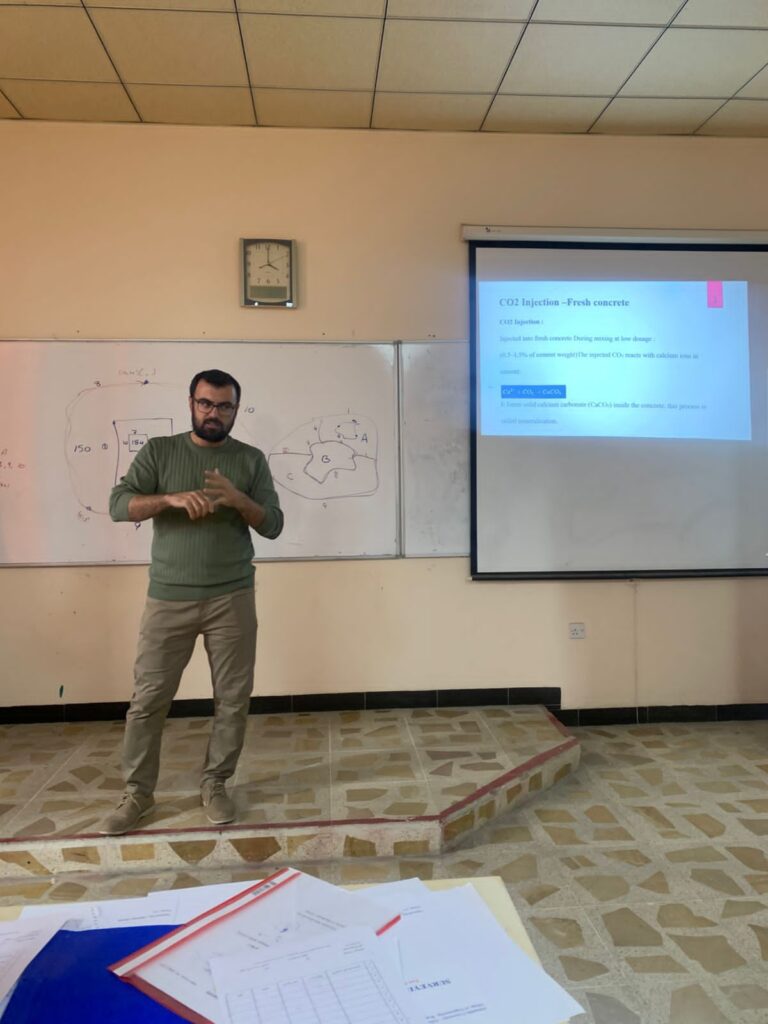
Water resources department
Cement manufacture, which includes limestone calcination and fuel burning, is a major source of
worldwide carbon dioxide emissions. Injecting CO₂ into fresh concrete is an innovative way to
lower the carbon footprint of construction materials. During the mixing step, a little amount of
carbon dioxide is added. The injected CO₂ interacts with calcium ions, forming stable calcium
carbonate inside the concrete matrix. The mineralisation process permanently retains carbon in
solid form. The production of tiny calcium carbonate crystals improves the pore structure of
concrete. As a result, porosity lowers while mechanical characteristics increase. The process also
speeds early hydration, which increases compressive strength. The experimental findings show
better durability and reduced water absorption. Therefore, CO₂ injection represents a sustainable
and practical approach for producing environmentally friendly concrete
Seminar Presenter:
Asisstant lecturer:Badrkhan Tahseen khede
Date:18/2/2026