geomatic

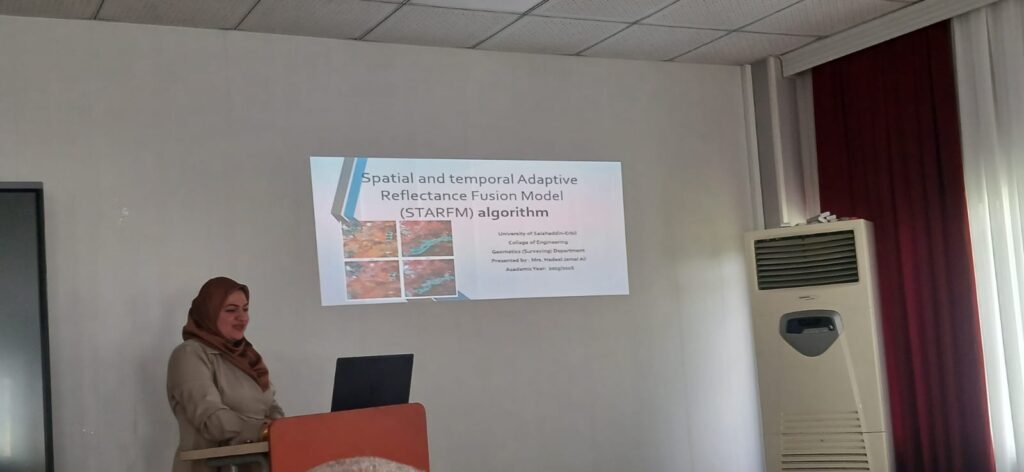
The Spatial and Temporal Adaptive Reflectance Fusion Model (STARFM)

Abstract:The Spatial and Temporal Adaptive Reflectance Fusion Model (STARFM) is a prominent algorithm used in remote sensing to blend images from different satellites—most commonly Landsat (high spatial resolution, low temporal frequency) and MODIS (low spatial resolution, high temporal frequency). This process creates “synthetic” daily images that possess the high spatial detail of Landsat. The model […]

The Spatial and Temporal Adaptive Reflectance Fusion Model (STARFM) Read More »

the multipath and N-LOS effects on GNSS positioning

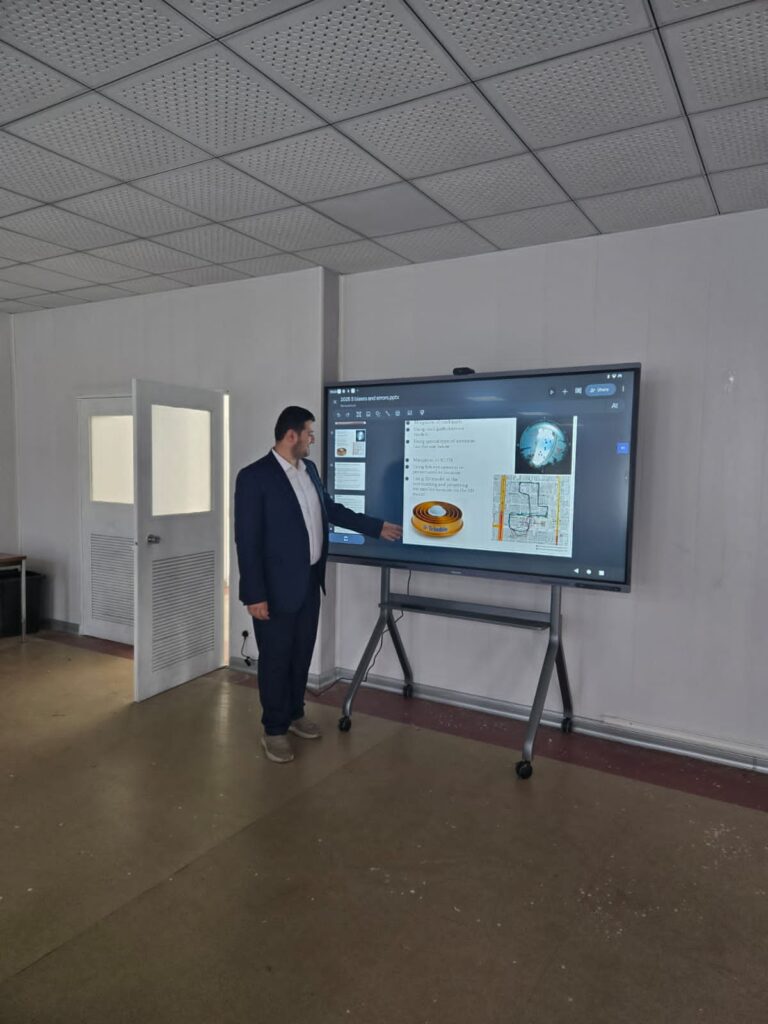
M.Ahmed TalabaniThe presentation was about the multipath and N-LOS effects on GNSS positioning. The multipath error happens because of receiving direct and reflected signals from the satellite at the same time. The N-LOS error happens when the direct signal is blocked and the reflected signal only reaches the receiver. The causes and the solutions were

the multipath and N-LOS effects on GNSS positioning Read More »

the jamming and spoofing threats on GNSS positioning

M.Ahmed talabaniThe presentation was about the jamming and spoofing threats on GNSS positioning. The jamming will cause the blockage of the GNSS signal partially and fully. As a result, the receiver will stop working or work inappropriately. The spoofing will lead to location calculation error to be in a random or specific place planned before.

the jamming and spoofing threats on GNSS positioning Read More »

Importance Factor IF in ubc 97 vs ASCE 7-20 codes Importance Factor IF introduced by ubc97 , ASCE7-20

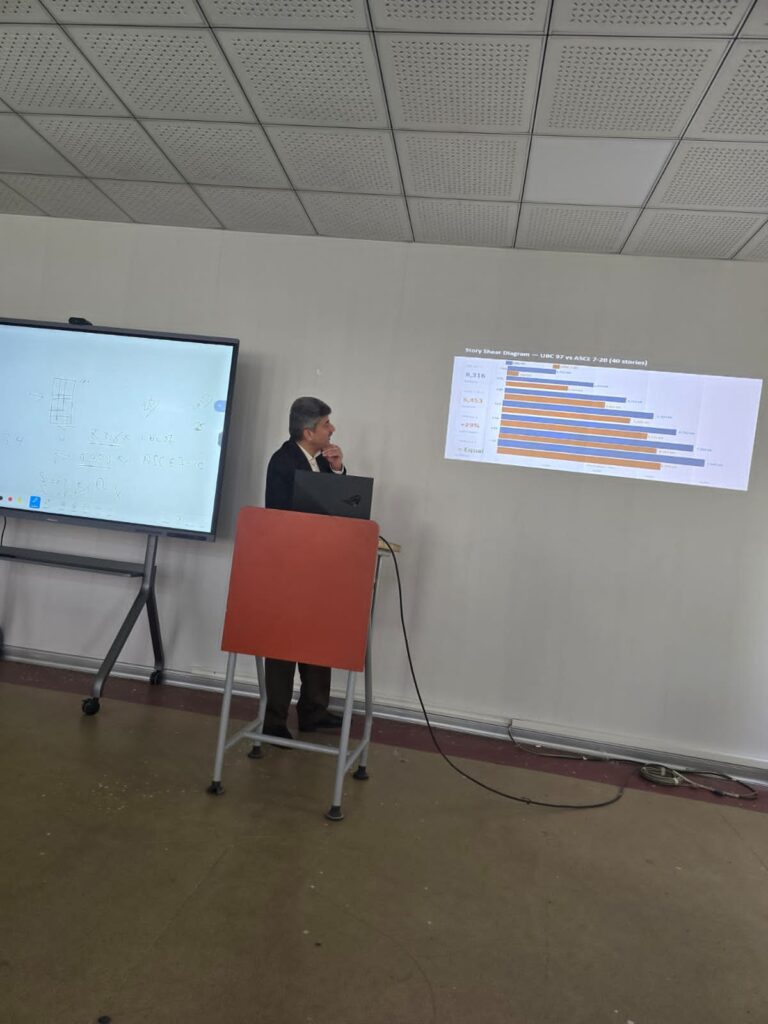
Dr. Kamaran Kakel Hamad 27-4-2026Importance Factor IF in ubc 97 vs ASCE 7-20 codes Importance Factor IF introduced by ubc97 , ASCE7-20 codes for the following purpose :1-Ensure higher safety for critical structures.2-Control post-earthquake functionality.3-Christchurch earthquake Stock Photos and Images.The IF values are (1.0, 1.25, 1.5) by risk category.

Importance Factor IF in ubc 97 vs ASCE 7-20 codesImportance Factor IF introduced by ubc97 , ASCE7-20 Read More »

Seismic DesignComparison for Erbil City

Dr.kamaran kakil27_4Seismic DesignComparison for Erbil CityThis seminar explains the differences between designing high–rise buildings in accordance with UBC97 and ASCE7-20 for seismic zone located in Erbil city. The specified zone for Erbil city was zone 2B according to UBC97, while assigning values Ss=0.6, S1=0.1 according to the Iraqi seismic map, and ASCE7-20 code. The comparisum

Seismic DesignComparison for Erbil City Read More »

Natural Phenomena Distribution using Geostatistical wizard in GIS

Brief description:This seminar explains how does the Geostatistical Wizard in ArcGIS Pro is a powerful guided tool that used to analyze and map the spatial distribution of natural phenomena (like temperature, pollution, rainfall, …) by converting scattered data into continuous surfaces through interpolation methods such as Kriging and IDW Dr.Dleen Mohamad

Natural Phenomena Distribution using Geostatistical wizard in GIS Read More »

Common Mistakes in Earthquake Construction

Water resources departmentPresenter:Dr. Sirwan K. MalaSeminar title:Common Mistakes in Earthquake ConstructionDate:28/4/2026 The Kurdistan Region is located within a seismically active zone, making it essential to consider earthquake effects in the design and construction of engineering projects.This presentation, titled “Common Mistakes in Earthquake Construction,” highlights critical mistakes frequently observed in both the design and construction phases.

Common Mistakes in Earthquake Construction Read More »

Geospatial Digital Twins from reality to virtual intelligence

Abstract:Geospatial digital twins are virtual, dynamic replicas of physical environments created by integrating GIS, BIM, and IoT sensor data, transforming static 3D models into living systems. They enable real-time monitoring, predictive simulation, and enhanced decision-making for infrastructure and smart cities by bridging the gap between reality capture and intelligent analysis.From Reality Capture to Virtual Representation

Geospatial Digital Twins from reality to virtual intelligence Read More »

Methods of image segmentations

This seminar presents an overview of methods of image segmentation, which are essential for dividing images into meaningful regions for further analysis. It covers a range of techniques including pixel-based methods, edge-based approaches, region-based segmentation, and advanced machine learning and deep learning models. The seminar concludes that accurate segmentation is critical for reliable building extraction

Methods of image segmentations Read More »