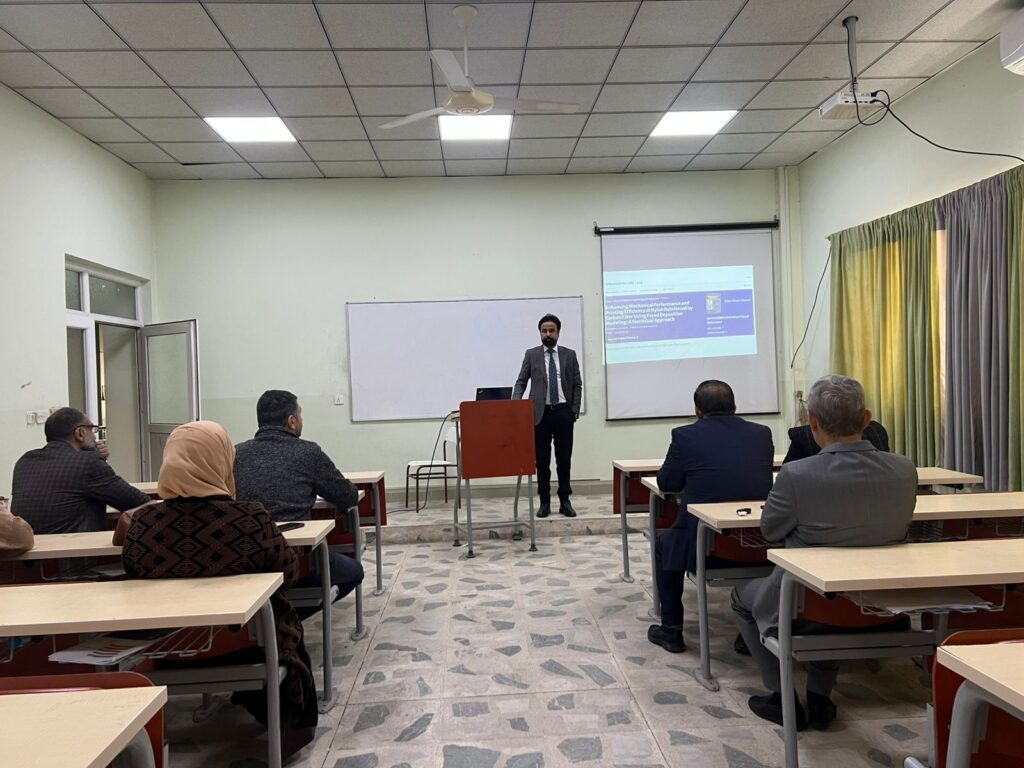
Modeling: A Statistical Approach
Additive manufacturing, particularly fused deposition modeling (FDM), has emerged as a transformative technology for fabricating polymer-based composites. Although carbon fiber-reinforced nylon composites (CFRNCs) are widely employed in high-performance engineering applications due to their favorable strength-to-weight ratio and thermal stability, limited research has systematically investigated the relationship between critical FDM processing parameters and the resultant composite properties. This study seeks to address this gap by optimizing FDM parameters to improve the mechanical performance and manufacturing efficiency of 3D-printed CFRNC samples. However, the impact of printing parameters—speed, infill pattern, and extrusion temperature—on the mechanical properties (maximum failure load and elongation at break), build time, and weight of printed composites was evaluated. Using response surface methodology (RSM) and ANOVA, we design experiments to evaluate various configurations: printing speeds, infill patterns, and extrusion temperatures.
Keywords: 3D printing, Mechanical Properties, Nylon/Carbon Fiber Composite.
SDG 9: Industry, Innovation and Infrastructure.
Dr. Fakhir Aziz Rasul Rozhbiany